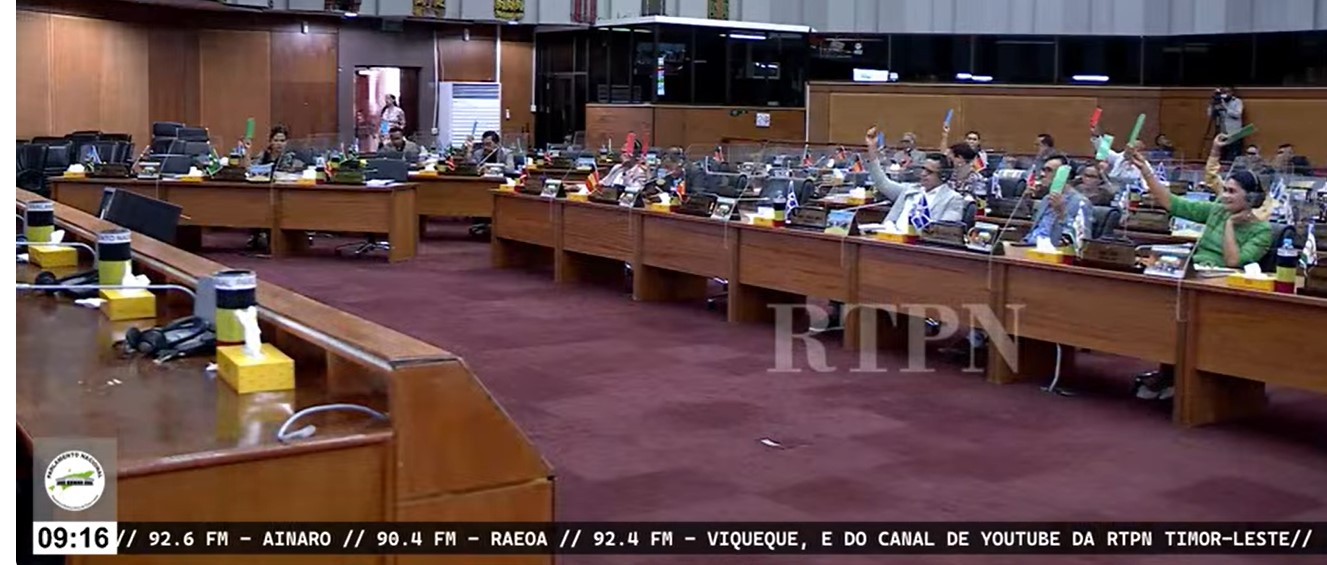
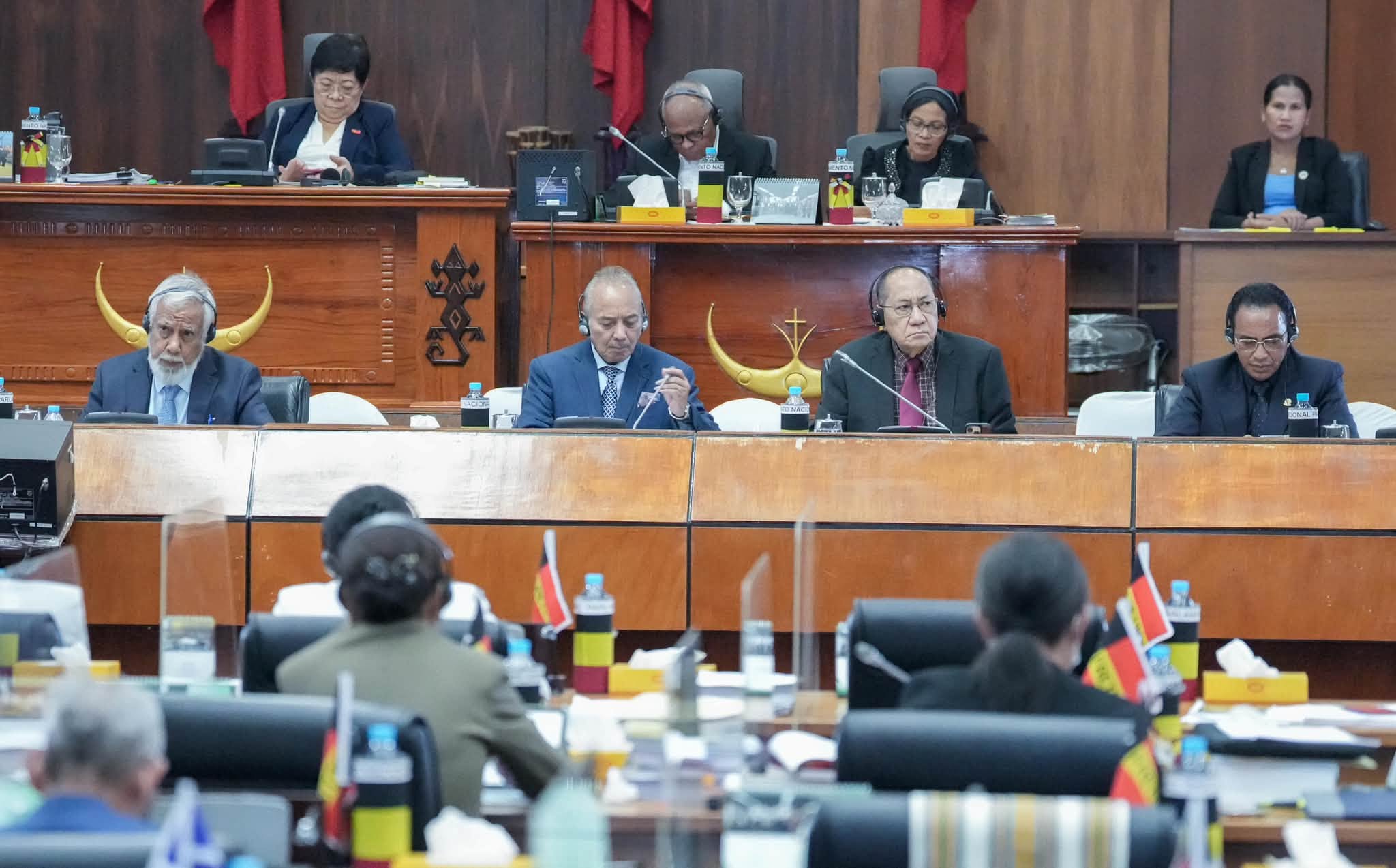

Dili, www.news-vip tv.com – Timor-Leste’s National Parliament on Monday (November 9, 2026) began general debate on the proposed 2027 General State Budget (OJE), valued at US$2.569 billion, as
the government outlined its priorities for economic transformation, public investment, infrastructure development and improved public services.
Prime Minister Kay Rala Xanana Gusmão presented the proposed budget directly to lawmakers, describing it as a strategic instrument to strengthen national resilience, diversify the economy and build a more sustainable economic future.
The 2027 budget carries the theme “Strengthening Resilience Through Transformation: Diversifying the Economy for a Sustainable Future”.
In his presentation, Xanana said the consolidated budget proposal of US$2.569 billion represents a 7.4
per cent increase compared with the 2026 Revised State Budget.
“The Government proposes a consolidated budget of US$2.569 billion, representing an increase of 7.4 per cent compared with the 2026 Revised Budget,” Xanana told Parliament.
He explained that economic resilience goes beyond the ability to withstand rising prices. It also means
protecting household incomes, ensuring water availability for agriculture during the dry season and
securing raw materials for infrastructure development and national industries.
“Resilience, for us, means guaranteeing secure incomes for families when prices rise. It means having
water for agriculture during the dry season and ensuring raw materials for infrastructure construction and the development of our industries,” the Prime Minister said.
He further stressed that a resilient state must be capable of maintaining quality public services even when confronted with economic shocks and difficulties.
“A resilient state is one that can continue delivering quality public services to its people, even when facing shocks and difficulties, and does not irresponsibly spend the savings of future generations,” he said.
Under the proposed 2027 budget, the Government has allocated US$535.3 million for public investment, including US$505.8 million for capital development projects.
Meanwhile, spending on goods and services will be reduced by 19.8 per cent to US$550.3 million,
reflecting the Government’s intention to prioritise transformative investment while controlling operational expenditure.
Approximately US$2.19 billion will finance existing government policies, while US$380.47 million is allocated to new priorities and expanded programmes.
Xanana said the policy-based budgeting approach would provide Parliament and citizens with stronger tools to monitor government spending and assess the results of public investment.
“With this approach, the National Parliament and citizens can have better oversight instruments to evaluate more clearly the costs of new decisions. Each budget allocation is linked to a policy, a programme and expected results,” he said.
The Government projects non-oil economic growth of 4.6 per cent in 2027, with inflation expected to remain around 1.8 per cent.
The economic sector receives US$956.9 million, covering infrastructure and productive sectors.
Agriculture is allocated US$37.8 million, an increase of more than 21 per cent compared with the previous budget. The funding will support irrigation systems, agricultural production, extension services and market development.
Xanana said strengthening domestic agricultural production was essential to improving rural incomes and reducing dependence on imports.
The Government also aims to consolidate improvements in rice production recorded in 2025 through better irrigation, stronger support for farmers, improved storage facilities and agricultural processing.
Tourism receives US$13.1 million, representing a 31 per cent increase. The allocation includes support for specialised tourism activities, including fishing-related and marine tourism.
“Every visitor creates opportunities for accommodation, guides, restaurants, transport, local producers and blue tourism operators,” Xanana said.
However, he emphasised that tourism development must go hand in hand with the protection of the country’s natural environment and cultural heritage.
The Government has allocated US$345.7 million for roads and bridges, US$157.6 million for electricity and US$23.5 million for water supply and sanitation.
Xanana said infrastructure investment must deliver tangible benefits to people’s daily lives.
“These services connect economic development to people’s everyday lives. A road allows farmers to sell their harvest before it spoils. Reliable electricity enables a small business to operate machinery throughout the day. Water protects health and saves families time,” he explained.
The Government also highlighted the importance of maintaining existing infrastructure, including roads, water systems and public buildings.
A yearly ceiling of US$250 million has been established for expenditure on existing projects under the Infrastructure Fund, with priority given to completing ongoing works.
The health sector will receive US$182.6 million, representing a 17 per cent increase, while education is allocated US$194.2 million, an increase of 11 per cent compared with 2026.
Child malnutrition remains a major concern for the Government.
During his presentation, Xanana revealed that approximately 45 per cent of children under five experience stunting, while 19 per cent are underweight relative to their height.
“These figures mean children whose health, learning and future opportunities are severely limited even before they begin life on an equal footing,” he said.
To address these challenges, the Government has allocated US$11.7 million for maternal and child support, particularly through the Bolsa Mãe programme.
A further US$24.7 million will support school feeding programmes implemented through municipal authorities.
In education, the net enrolment rate in basic education has reached 93.3 per cent.
Xanana stressed that increasing school enrolment must be accompanied by improvements in learning quality, continuous teacher training, attendance and vocational education.
The oil and mineral sectors remain central to the Government’s long-term development strategy.
The 2027 budget allocates US$244.8 million for new policies in the petroleum and mineral sectors, including support for TIMOR GAP and the development of the Kuda Tasi, Jahal and Greater Sunrise projects.
Murak-Rai Timor will receive US$14.9 million to support mineral exploration.
Xanana said the development of Greater Sunrise and plans to process natural gas on Timor-Leste’s
southern coast could create new industries, generate employment and strengthen national technical capabilities.
“Natural gas from Greater Sunrise will be processed in Timor-Leste. This will allow the development of new industries, create jobs and strengthen the skills of our entire population,” he said.
The Prime Minister also highlighted Timor-Leste’s secured participation in Greater Sunrise through the
acquisition process involving Osaka Gas Australia and Woodside interests.
The Government expects the Kuda Tasi and Jahal projects to generate initial revenues for the Petroleum Fund before 2030.
The Government has allocated approximately US$367 million to social inclusion, covering support for national liberation veterans, social security and assistance to vulnerable families.
Funding for the country’s 13 municipalities will increase to US$148.1 million. Combined with the allocation for the Special Administrative Region of Oecusse-Ambeno (RAEOA), total funding for local administrations reaches US$171.6 million.
The National Programme for Suco Development (PNDS) receives US$22.9 million to support community-based development projects.
Additionally, approximately US$277.9 million is allocated for capital investment across 1,643 projects in
the municipalities and Oecusse-Ambeno, excluding projects under the Ministry of Public Works.
As part of its fiscal reform agenda, the Government plans to introduce a Value Added Tax (VAT) with a
proposed rate of 5 per cent starting in 2028, subject to parliamentary approval.
Xanana said preparations must be carefully managed to give businesses and tax administration sufficient time to adapt, while protecting low-income households and essential goods.
The Prime Minister acknowledged that borrowing under favourable conditions could finance productive
investments and reduce immediate pressure on national savings. However, he warned that every loan creates future obligations.
He stressed the importance of evaluating project costs, operational requirements, maintenance expenses and their long-term impact on public finances.
In the closing section of his address, Xanana emphasised that the Government alone cannot provide employment for the entire population.
He called for stronger participation from private businesses, cooperatives, agriculture and fisheries to expand productive economic activities and create sustainable employment.
“Public administration cannot employ everyone. We need to develop agricultural activities, fisheries, workshops and private companies that can grow, create jobs and contribute to national revenue,” he said.
He also urged businesses and cooperatives to strengthen their management capacity and prepare to compete in larger markets.
Addressing young people, the Prime Minister called on them to take education and professional training seriously.
“Our country needs your skills and your ideas. The Government’s responsibility is to create the conditions so that your efforts can be transformed into real opportunities,” Xanana said.
He also reminded public servants of their responsibility to the people who depend on their services.
The general debate at the National Parliament marks an important stage in the legislative process, allowing lawmakers to examine the Government’s proposed spending priorities, investment plans and expected economic and social outcomes.
The proposed US$2.569 billion budget also includes resources for presidential elections and two or three municipal elections, depending on the readiness of municipal structures.
Concluding his address, Xanana called on all sectors of society to ensure that public investment translates into tangible improvements in people’s lives.
“Let us make 2027 a year in which most of our investment is translated into productive activity, more public services reach those who need them, and more Timorese families can see a secure future in their own country,” the Prime Minister said.
The parliamentary debate will continue as lawmakers examine the proposed allocations and government policies before the budget proceeds through the remaining parliamentary stages.